Mastering Visual Presentation with the Open Journal Mockup PSD Front and Back
In the competitive landscape of digital design and physical product sales, the difference between a browser bouncing away and a customer making a purchase often comes down to presentation. For designers, authors, and stationery enthusiasts, showcasing a concept realistically before it goes to print is essential. This is where the Open Journal Mockup PSD Front and Back becomes an indispensable tool. Unlike static images or flat renders, this specific template offers a dynamic, three-dimensional perspective that allows creators to visualize their work in a lifelike setting.
The core value of utilizing a high-quality mockup lies in its ability to bridge the gap between imagination and reality. When you are designing a planner, a diary, or a hardcover notebook, seeing your artwork applied to a textured surface under natural lighting conditions provides critical insight into how the final product will perform. The Open Journal Mockup PSD, Front and Back Hardcover Notebook Template is engineered to provide exactly this level of fidelity, ensuring that your digital efforts translate seamlessly into tangible expectations.
The Power of Realistic Visualization
Why settle for a flat JPEG when you can present your design with depth, shadow, and texture? The primary function of the Open Journal Mockup PSD Front and Back is to simulate a professional photoshoot without the associated costs or logistical hurdles. Traditionally, photographing a physical prototype requires expensive camera equipment, controlled lighting setups, and significant post-processing time. Even then, achieving the perfect angle to show both the interior spread and the exterior cover simultaneously can be challenging.
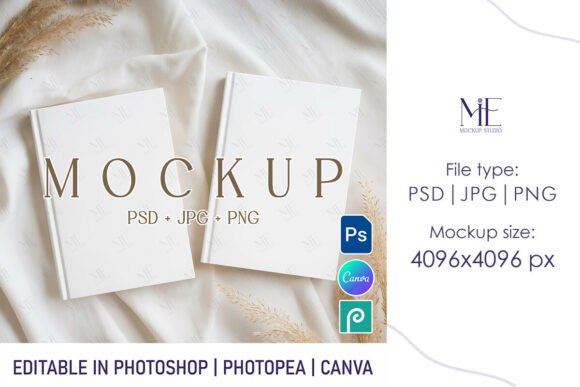
This digital solution eliminates those barriers. By leveraging advanced Smart Object technology within Adobe Photoshop, users can insert their designs into pre-configured layers that automatically adapt to the contours of the book. The result is a Book Cover Planner Mock-up with Natural Light that looks as though it was photographed by a professional studio. The inclusion of natural light effects is particularly crucial; it adds warmth and realism, highlighting the grain of the paper and the sheen of the cover material, which helps potential buyers envision holding the actual item in their hands.
Key Features and Technical Specifications
When evaluating whether a mockup template fits your workflow, understanding the technical deliverables is vital. The package typically includes two primary file types designed to cater to different stages of the presentation process:
- Editable PSD File: This is the heart of the toolkit. It contains fully editable Smart Object layers. These layers are intelligent; they warp and blend your design to match the folds, shadows, and perspective of the open journal automatically.
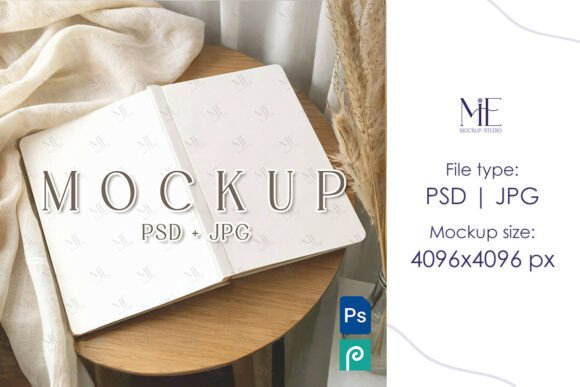
- High-Resolution JPG: Included is a 4096x4096 pixel image. This resolution is exceptional for web use, ensuring that your portfolio pieces or e-commerce listings remain crisp on high-DPI screens and retina displays.
It is important to note that these are digital downloads. No physical items are shipped, and the files contain no watermarks or placeholder text that would distract from your design. This immediacy allows for a rapid iteration process. You can test five different cover concepts in the time it would take to print and photograph a single prototype.
Practical Applications Across Industries
The versatility of the Open Journal Mockup PSD Front and Back extends far beyond simple book covers. While it is naturally suited for authors and publishers, its utility spans various creative and commercial sectors. Understanding where and how to apply this tool can maximize its return on investment for your business or personal brand.
- E-Commerce and Online Retail: For sellers on platforms like Etsy, Amazon KDP, or independent Shopify stores, product imagery is the primary sales driver. Using a realistic mockup allows you to list products before they are manufactured, validating market interest without upfront inventory costs.
- Graphic Design Portfolios: Designers need to show clients not just the logo or pattern, but how it lives in the real world. Including a section in your portfolio featuring the Open Journal Mockup PSD, Front and Back Hardcover Notebook Template demonstrates an understanding of context and application.
- Stationery and Planning Communities: The planner community is vast and visually driven. Sharing "flat lays" or styled shots of custom planners on social media channels like Instagram or Pinterest requires high-aesthetic visuals. The natural lighting effect in this mockup aligns perfectly with current social media trends.
- Corporate Branding: Companies often produce branded journals for conferences, employee onboarding, or client gifts. Presenting a mockup to stakeholders during the approval phase is far more effective than showing a digital swatch, as it conveys the premium feel of the final deliverable.
Navigating the Workflow: From Download to Display
One of the most appealing aspects of this tool is its user-friendly nature, even for those who may not be Photoshop experts. The workflow is streamlined to ensure that you can focus on creativity rather than technical troubleshooting. Here is how the process generally unfolds:
First, upon purchase, you instantly download the files. There is no waiting for shipping. Once you open the PSD file in Photoshop, you locate the specific layer marked as the Smart Object. This is usually indicated by a small icon on the layer thumbnail. By double-clicking this icon, a new tab opens containing your design canvas.
You then place your artwork—whether it is a complex illustration, a typographic layout, or a solid color pattern—into this window. When you save this specific layer, Photoshop automatically processes the image, applying the necessary distortions, shadows, and blending modes to integrate it into the main mockup scene. The final step is simply saving the composite image, ready for upload to your website or social media channels.
Evaluating Suitability and Limitations
While the Open Journal Mockup PSD Front and Back is a powerful asset, it is essential to maintain realistic expectations regarding its capabilities. This tool is designed for visualization and marketing, not for replacing the need for physical proofing. Colors on a screen, even in a high-fidelity mockup, can differ slightly from printed ink due to monitor calibration and printing variances. Therefore, while the mockup provides an excellent representation, it should be used alongside physical color checks for critical brand colors.
Furthermore, the effectiveness of the mockup relies on the quality of the source design. Because the Smart Objects preserve the details of your upload, low-resolution images will appear pixelated in the final render. To achieve the "polished look" promised by the template, ensure your input files are high resolution, ideally matching or exceeding the 4096px width of the mockup canvas.
Another consideration is the style alignment. The Book Cover Planner Mock-up with Natural Light features a specific aesthetic—clean, bright, and organic. If your brand identity relies on dark, moody, or neon-lit environments, this specific lighting setup might require additional tweaking in Photoshop to match your vibe, or you may need to seek a variation with different lighting conditions.
Maximizing Value for Creators
Ultimately, the decision to utilize the Open Journal Mockup PSD Front and Back should be driven by a desire to elevate the perceived value of your work. In a digital-first economy, the visual presentation of a product is often synonymous with its quality. A sloppy or flat presentation can inadvertently signal a lack of professionalism, whereas a nuanced, shadow-rich mockup suggests attention to detail and premium quality.
For freelancers, this tool saves billable hours. Instead of spending time setting up a photoshoot, that time can be reinvested into design refinement or client acquisition. For business owners, it reduces the risk of large print runs by allowing for virtual A/B testing of cover designs with focus groups or email lists.
The inclusion of both front and back views in a single open spread is a unique advantage. It tells a complete story. The front cover grabs attention, the inside pages demonstrate utility and content quality, and the back cover reinforces branding. Having all these elements visible in one cohesive image simplifies the storytelling process for your audience.
Conclusion
In conclusion, the Open Journal Mockup PSD Front and Back represents more than just a digital file; it is a strategic asset for modern creators. By combining technical ease of use with high-end visual realism, it empowers users to present their ideas with confidence and clarity. Whether you are launching a new line of planners, building a design portfolio, or pitching a corporate project, the ability to visualize your work in a natural, professional setting is invaluable.
As the digital marketplace continues to grow more crowded, the tools that help you stand out become increasingly critical. Embracing high-quality mockups allows you to compete on the level of major brands, providing your audience with the immersive experience they expect. With instant access, no shipping delays, and the flexibility of editable layers, this template offers a practical, efficient, and highly effective solution for anyone looking to showcase their creative vision in the best possible light.