Evaluating the Voucher Ticket Mockup PSD PNG for Professional Design Presentations
In the competitive landscape of graphic design and digital marketing, the presentation of a concept is often just as critical as the concept itself. Whether you are a freelance designer showcasing a new brand identity, a small business owner creating promotional materials, or a wedding planner finalizing gift certificates, the visual fidelity of your mockups can dictate client approval. The Voucher Ticket Mockup PSD PNG has emerged as a specific category of digital asset designed to bridge the gap between a flat digital file and a tangible, realistic product. Understanding what this tool offers, how it compares to alternative formats, and when it is the most appropriate choice requires a nuanced look at workflow efficiency, image quality, and end-user expectations.
Defining the Voucher Ticket Mockup PSD PNG Ecosystem
At its core, a Voucher Ticket Mockup PSD PNG refers to a dual-format resource package used by creatives to visualize designs on voucher or ticket templates. The "PSD" component stands for Photoshop Document, a layered file format that allows for deep customization through Smart Objects. This is where the heavy lifting happens; designers insert their artwork into a designated layer, and the software automatically applies lighting, shadows, texture, and perspective to make the design look printed on physical paper. The "PNG" component typically refers to the high-resolution output or supplementary transparent background files included in the package, ensuring the final image can be placed over various backgrounds without unsightly white boxes.
What makes this specific combination distinct is the balance between editability and portability. Unlike a static JPG preview, the PSD file grants total control over the visual narrative. Conversely, unlike a complex 3D rendering engine that requires significant processing power and technical knowledge, these mockups are pre-rendered environments. They offer a "plug-and-play" solution where the environmental lighting and paper texture are already perfected by the mockup creator, allowing the user to focus solely on their graphic design.
Comparative Analysis: PSD Mockups vs. Alternative Visualization Methods
When evaluating resources for presenting voucher designs, professionals generally weigh three primary approaches: dedicated PSD mockups, browser-based mockup generators, and custom 3D modeling. Each method serves different needs based on budget, time constraints, and required realism.
PSD Mockups vs. Online Generators:
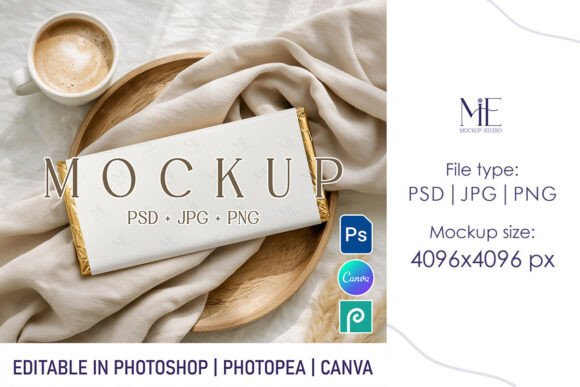
Browser-based tools have gained popularity due to their ease of use; they require no software installation. However, they often come with limitations regarding resolution and customization. Many online generators compress images, which can be detrimental when printing large-format marketing materials or displaying work on high-DPI screens. Furthermore, online tools rarely allow for fine-tuning the shadow density or adjusting the angle of the voucher to match specific branding guidelines. A Voucher Ticket Mockup PSD PNG set, downloaded locally, provides full resolution (often 4096x4096 pixels or higher) and retains the integrity of the original design without compression artifacts. For professionals who need to deliver print-ready proofs or high-end portfolio pieces, the local PSD file is superior.
PSD Mockups vs. Custom 3D Rendering:
On the other end of the spectrum is custom 3D modeling using software like Blender or Cinema 4D. While this offers infinite flexibility, the learning curve is steep, and the time investment is substantial. Setting up realistic paper textures, subsurface scattering, and studio lighting can take hours for a single image. Pre-made PSD mockups democratize this level of realism. They utilize advanced smart object technology to simulate these 3D effects instantly. For most commercial projects involving wedding travel certificates or event tickets, the marginal gain in realism from custom 3D modeling does not justify the extra time and cost compared to using a high-quality PSD template.
Key Strengths and Practical Applications
The primary strength of utilizing a Voucher Ticket Mockup PSD PNG lies in its ability to convey texture and scale. A flat digital file cannot communicate the weight of the cardstock or the finish (matte vs. glossy) effectively. These mockups simulate physical properties, helping clients visualize the final product. This is particularly vital for industries like hospitality and events.
Consider the scenario of a Wedding Travel Certificate Template. Couples purchasing these gifts want to feel the excitement of a future trip. Presenting the certificate as a flat PDF on a screen feels transactional. However, placing that same design onto a realistic voucher mockup with subtle paper grain and soft drop shadows elevates the perceived value of the gift. It transforms a digital promise into a tangible keepsake. Similarly, for corporate Gift Card Mock-ups, realism builds trust. A potential customer is more likely to perceive a brand as established and professional if their promotional materials are showcased in a high-fidelity environment.
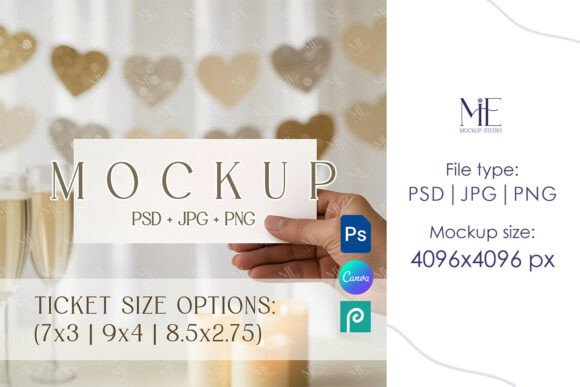
The inclusion of multiple sizes within a single package further enhances utility. A versatile set might include dimensions suitable for standard business cards, larger event tickets, or specific label sizes (such as the 5.25x5.5 inches often used for packaging or square vouchers). This variety allows designers to test how their layout scales across different formats without needing to purchase separate assets for each dimension.
Limitations and Decision Factors
Despite their advantages, PSD mockups are not a universal solution. The most significant barrier to entry is the requirement for Adobe Photoshop. Users without access to this specific software cannot utilize the Smart Object features that make these files powerful. For teams relying entirely on open-source tools like GIMP or vector-based programs like Illustrator (without Photoshop integration), the PSD format may present compatibility issues or require cumbersome workarounds.
Additionally, while Smart Objects are efficient, they operate within the constraints of the pre-set scene. If a project requires a voucher to be shown crumpled, folded in a specific non-standard way, or interacting with a unique prop not included in the scene, the mockup may feel restrictive. In such cases, a custom photoshoot or 3D render might be necessary. Furthermore, users must be mindful of licensing. While many digital downloads offer commercial use, it is essential to verify whether the license permits unlimited client projects or if there are restrictions on resale.
Workflow Integration and Best Practices
Integrating a Voucher Ticket Mockup PSD PNG into a professional workflow is straightforward but benefits from a structured approach to maintain organization and quality.
- File Preparation: Before opening the mockup, ensure your design file is ready. It should be sized correctly for the mockup's Smart Object dimensions to avoid pixelation upon scaling.
- Smart Object Editing: Upon opening the PSD, locate the layer marked as a Smart Object (usually indicated by a small icon on the layer thumbnail). Double-clicking this opens a separate document window. This is the canvas where your design lives.
- Integration and Saving: Paste or place your design into this window. It is crucial to save this specific sub-file (Ctrl+S or Cmd+S) to update the main mockup. Once saved, the main document automatically renders the design with all applied effects.
- Exporting: For web use, export as a high-quality JPG or PNG. For print presentations, ensure the color mode matches the intended output (usually CMYK for print, though many mockups are RGB for screen display).
A common mistake is ignoring the lighting context. If your design has strong directional shadows, ensure they align with the light source in the mockup scene. Mismatched lighting can break the illusion of realism, making the design look "pasted on" rather than printed.
Making the Right Choice for Your Project
Deciding whether to invest in a Voucher Ticket Mockup PSD PNG set depends largely on your volume of work and the expectations of your audience. If you frequently produce promotional materials, event invitations, or gift certificates, having a library of high-quality, editable mockups is an investment that pays dividends in time saved and client satisfaction. The ability to instantly swap designs allows for rapid A/B testing of different color schemes or layouts.
However, if your needs are sporadic or strictly limited to low-resolution web thumbnails, free online generators might suffice. But for anyone aiming to establish a premium brand presence or deliver professional-grade proofs to clients, the depth and control offered by the PSD format are unmatched. The distinction lies in the details: the crispness of the text, the subtlety of the paper texture, and the professional polish that only a high-resolution, layered file can provide.
Ultimately, the goal is to present your creative work in the best possible light. By understanding the trade-offs between convenience and control, and recognizing the specific strengths of the Voucher Ticket Mockup PSD PNG format, designers can make informed decisions that enhance their portfolio and streamline their production process. Whether for a Wedding Travel Certificate or a corporate loyalty card, the right mockup turns a simple design file into a compelling visual story.